
When parents drop their kids off at camp, they’re entrusting you with their safety. Lifeguards and counselors are the visible front line, but the real nerve center of your camp’s health and safety is the infirmary, run by your camp nurse.
A great camp nurse is so much more than someone who hands out bandages and ice packs. They are the ultimate risk managers, responsible for the entire health ecosystem of your camp community—campers and staff.
Think about it. They’re juggling medication schedules for dozens, sometimes hundreds, of kids. They're monitoring chronic conditions like diabetes and asthma, and they’re the first responders for everything from a twisted ankle to a life-threatening allergic reaction. It’s a demanding job that requires a sharp clinical mind and a calm, reassuring presence.
The sheer number of campers highlights just how critical this role is. In the U.S. alone, over 14 million children head to summer camp each year. That's a massive population with a huge range of health needs, from daily vitamins to complex medical protocols. Add in young staff members who often need health guidance themselves, and you can see why the camp nurse is at the absolute center of your operation. You can learn more about the unique specialty of camp nursing to really grasp its scope.
This scale brings serious legal and ethical duties, especially around privacy. Every bit of health information—from a minor allergy to a detailed medical history—is considered Protected Health Information (PHI).
One slip-up, like leaving a medical chart out on a desk or casually mentioning a camper’s condition to an unauthorized counselor, can spiral into a serious HIPAA violation. A nurse’s job is as much about protecting information as it is about providing care.
The Health Insurance Portability and Accountability Act (HIPAA) isn’t just for hospitals—it's a critical legal framework that absolutely applies to summer camps. Staying compliant takes more than good intentions; it requires solid systems and technical controls, especially in the software you use.
This is where modern camp management software becomes a necessity. Pen-and-paper logs just don't cut it anymore. When you're vetting a platform, you must ensure it has specific controls needed to remain HIPAA compliant:
By investing in the right nurse and giving them HIPAA-compliant tools, you move from just filling a position to building a strategic health and safety program. This not only keeps your campers safe but also protects your camp’s reputation and long-term viability.
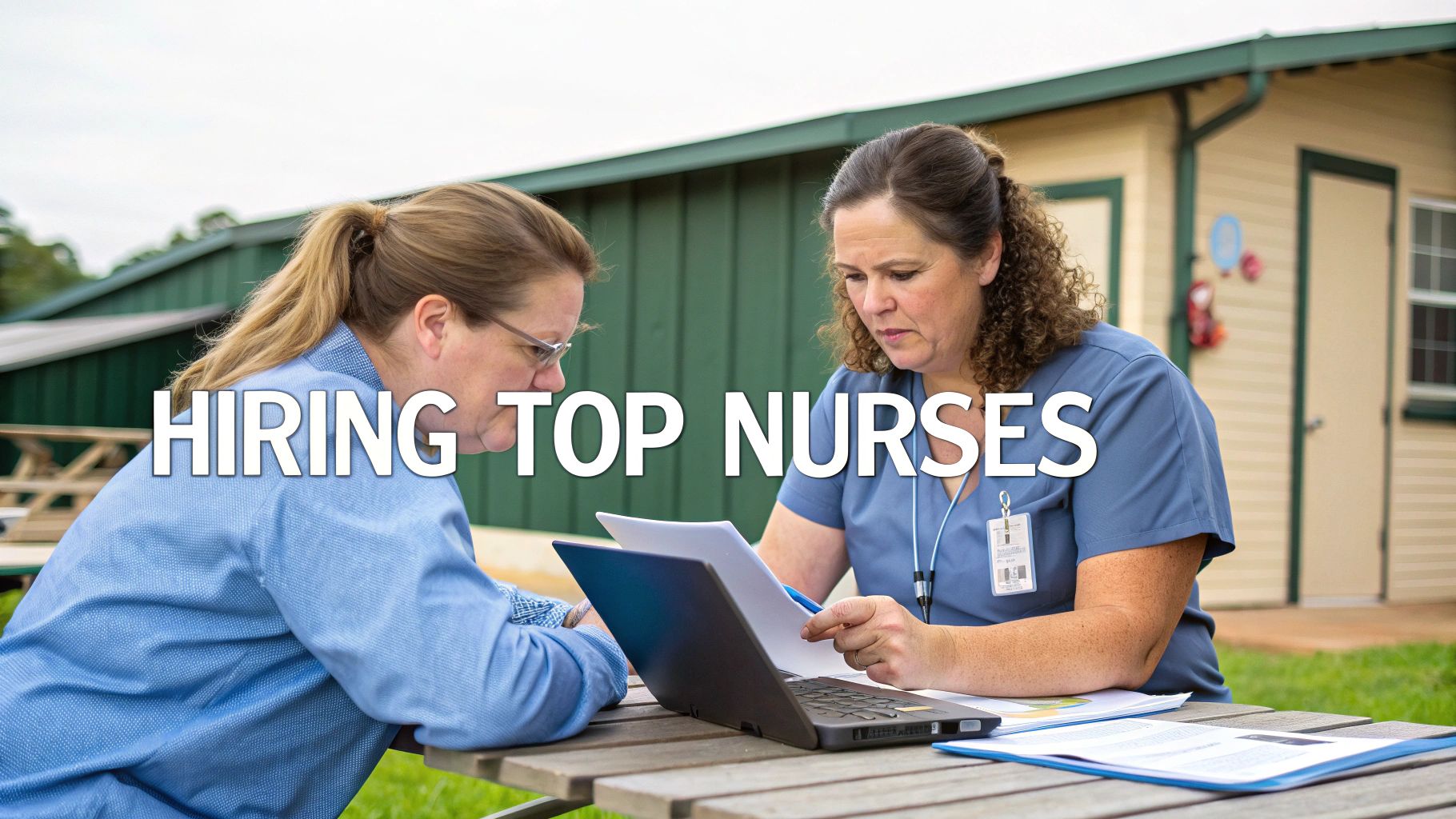
Securing a great camp nurse often feels like searching for a needle in a haystack. The truth is, the best candidates aren't just looking for another job—they're looking for a unique professional experience. To find them, you need a recruiting strategy that goes way beyond posting on mainstream job boards.
The most effective approach is to build a diverse pool of candidates long before the hiring season even kicks off. This means looking in places where skilled, mission-driven nurses naturally gather.
Thinking outside the box is key to finding professionals who are not only clinically skilled but also have the right temperament for the controlled chaos of camp life. Your search has to be proactive and targeted.
Consider these high-potential recruiting channels:
Since many camp nursing positions are seasonal, resources that list part-time nurse practitioner jobs can be goldmines. These platforms connect you directly with qualified professionals seeking flexible summer gigs.
Your job description is your first impression, so make it count. It needs to sell the experience, not just list the duties.
Instead of a dry, clinical list of tasks, focus on what makes being a camp nurse a rewarding and unforgettable opportunity. Talk about being part of a vibrant community, making a real impact on kids' lives, and enjoying the outdoors. For many nurses used to high-stress hospital settings, the chance to care for healthy kids in a joyful environment is a powerful draw.
A job description that reads "Administer medications and perform first aid" will attract applicants. But one that says "Join a passionate team dedicated to creating a safe and memorable summer for kids, where your skills will help children thrive" will attract the right applicants.
Once you have applicants, your interview questions need to dig deeper than just clinical skills. You're hiring for a unique role that blends medical expertise with mentorship and adaptability.
Here are a few questions that can help you gauge if a candidate is the right fit for the dynamic, and sometimes unpredictable, world of summer camp.
Essential Summer Camp Nurse Interview Questions
Question CategorySample QuestionPediatric Experience"Can you describe a time you had to manage a common pediatric issue, like an allergic reaction or asthma attack, outside of a clinical setting?"Adaptability & Problem-Solving"Imagine three campers show up at once—one with a scraped knee, one with a headache, and one who is homesick. How do you prioritize and manage the situation?"Communication & Teamwork"How would you handle a situation where you and a counselor disagree on the best course of action for a camper’s minor injury?"Emergency Preparedness"Walk me through the immediate steps you would take if a camper had a serious medical emergency far from the health center."Understanding the Camp Role"What aspects of the camp nurse role are you most excited about, and what do you anticipate being the most challenging?"
These questions go beyond a resume to reveal how a candidate thinks on their feet and whether they truly understand the culture you're trying to build.
To attract top talent, your compensation has to be competitive. It's not just about the paycheck; it's about the entire package.
First, know the market rate. In the U.S., camp nurses earn an average monthly salary of $7,530, which breaks down to about $1,737 per week. Starting pay often begins around $5,180 monthly ($1,195 weekly). Of course, this varies a lot based on location and experience—states like California and New York will command higher salaries.
But compensation is more than just salary. Here’s how to build an irresistible offer:
By combining a competitive salary with these valuable non-monetary benefits, you create a total compensation package that stands out and attracts the highly qualified summer camp nurses your camp deserves.
Let's be honest: handling medications for potentially hundreds of kids while protecting their private health information is one of the most stressful jobs at camp. Your nurse is the linchpin in this whole operation, turning what could be a logistical nightmare into a smooth, safe, and secure process.
The daily "med pass" can feel like an overwhelming parade of pills, inhalers, and EpiPens. Without a rock-solid system, it's terrifyingly easy for mistakes to happen. This process demands absolute precision, from nailing the "Five Rights" of medication administration—right patient, right drug, right dose, right route, and right time—to documenting every single dose perfectly.
Great medication management doesn't start when the camper arrives; it starts with your protocols. This system is all about secure storage, meticulous record-keeping, and crystal-clear dispensing routines. Every single medication, from a daily ADHD pill to a rescue inhaler, deserves the same intense level of care.
This system is the backbone of camper safety. One missed dose or a simple mix-up can have serious consequences, which makes the nurse's role—and the tools they use—absolutely vital.
The Health Insurance Portability and Accountability Act (HIPAA) isn't just for hospitals. It absolutely applies to your summer camp. Any piece of health data you collect, from a simple allergy note to a detailed medical history, is considered Protected Health Information (PHI).
A HIPAA breach at camp can be as simple as a counselor leaving a medical form on a cabin porch or two staff members casually discussing a camper's condition where others can overhear. These small slip-ups can lead to huge legal and financial penalties, not to mention a complete breakdown of trust with parents.
Protecting PHI is non-negotiable. It means ensuring sensitive medical details are only seen by those with a genuine need to know—which is almost exclusively your licensed summer camp nurses and maybe a director. Every other staff member should only get the bare minimum information required to keep a child safe.
To keep your health center compliant, using an up-to-date HIPAA compliance checklist is a must for managing camper data. It gives you a clear framework to audit your practices and find any weak spots before they become real problems.
This is exactly where relying on spreadsheets or paper files becomes a massive liability. Modern camp management software is built with compliance in mind, giving you the technical safeguards you need to protect sensitive information and empower your nurses. Without specific controls built into your software, maintaining HIPAA compliance is nearly impossible in a fast-paced camp environment.
The single most important feature here is role-based access control. Think of it as a digital lock and key, a critical software control needed to ensure only the right people can see specific information.
For instance, a smart setup might look like this:
Staff RoleLevel of Access to PHIExample Information VisibleCamp NurseFull AccessComplete medical history, medication details, emergency contacts, physician's notes.Camp DirectorLimited AccessHigh-level medical alerts (e.g., severe allergies), emergency contacts.Cabin CounselorMinimal AccessBasic alerts only (e.g., "Peanut Allergy," "Asthmatic"). No access to diagnoses or medication specifics.Kitchen StaffMinimal AccessAllergy lists and dietary restrictions only. No names or other medical details.
You simply can't enforce this level of granular control with a filing cabinet full of paper. With the right software, you create a secure ecosystem where your summer camp nurses get the detailed info they need, while counselors only see what’s essential for safety. This software-based control is a cornerstone of a HIPAA-compliant operation.
Better yet, a strong platform automates the documentation. When a nurse logs a medication, the system creates a secure, time-stamped digital record. This eliminates the risk of lost paper logs and provides a clean, auditable trail for every medical interaction. You can learn more about how Campium's features are built to protect camper privacy and ensure https://www.campium.com/features/privacy-compliance. By putting these digital controls in place, you’re not just making your nurse's job easier—you’re building a foundation of safety and trust that is essential for a great summer.
So, you've hired a fantastic nurse. Great! But the real work is just beginning. A solid, well-thought-out onboarding process is what separates a nurse who spends the summer just putting out fires from one who proactively owns your camp's health and safety from day one.
The goal isn't just to hand over the keys to the health center. It's about bringing them into your camp's unique world—its culture, its rhythm, and its people. This means going way beyond the basics to give them the context and tools they need to truly thrive.
The first few days are all about a deep dive into your camp's specific health and safety playbook. Every camp has its quirks, and your nurse needs to understand yours inside and out before the first bus of campers arrives.
Your orientation checklist absolutely must include a hands-on review of:
A well-prepared nurse is your best defense against chaos. They need to know not just the what but the why behind your procedures. This empowers them to make confident, correct decisions when the pressure is on.
A huge part of onboarding any modern camp nurse is getting them comfortable with your health management software. This system is the nerve center of your health lodge, and your nurse's fluency with it is non-negotiable for both efficiency and legal compliance.
Of course, the training needs to cover the basics like looking up camper health histories and logging treatments. But the most critical piece? HIPAA compliance. You have to show them precisely how the software is built to protect sensitive camper information.
Explain how features like role-based permissions work, ensuring only authorized medical staff can see Protected Health Information (PHI). This is what keeps camper data private and your camp compliant with federal law. Frankly, trying to maintain HIPAA standards without a system that has built-in controls is a nightmare in a busy camp environment.
Clear, consistent medication management is another core function of the health center. Having a visual process flow helps everyone stick to the same safe and accurate steps.
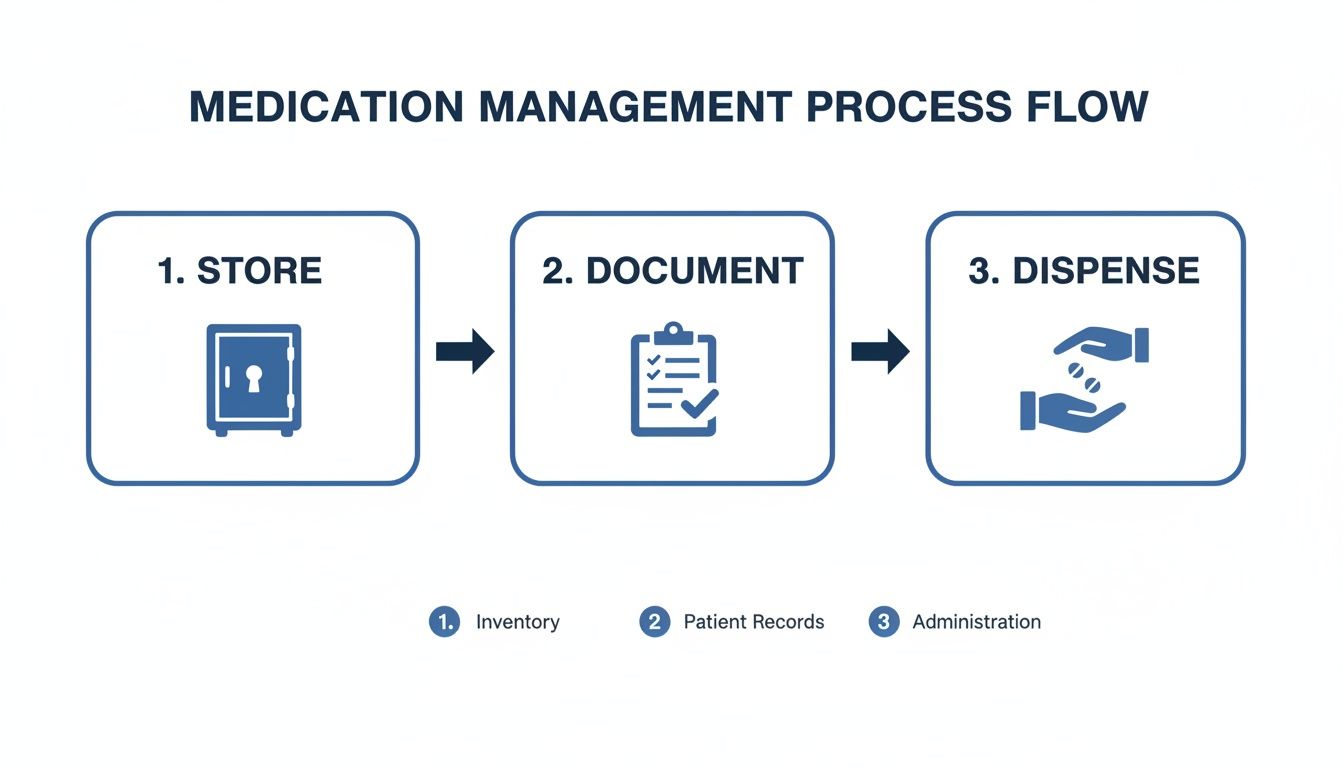
This kind of process shows the non-negotiable steps: secure storage, meticulous documentation, and safe dispensing of every single medication. Following a consistent procedure like this is the single best way to minimize human error and create a bulletproof audit trail for every dose given. It’s not just a "best practice"—it's fundamental to camp safety and managing your liability.
With a well-trained nurse and the right tools, you can handle this complex job with total confidence. To see how technology can improve these workflows, check out the features of a mobile app for parents and staff.
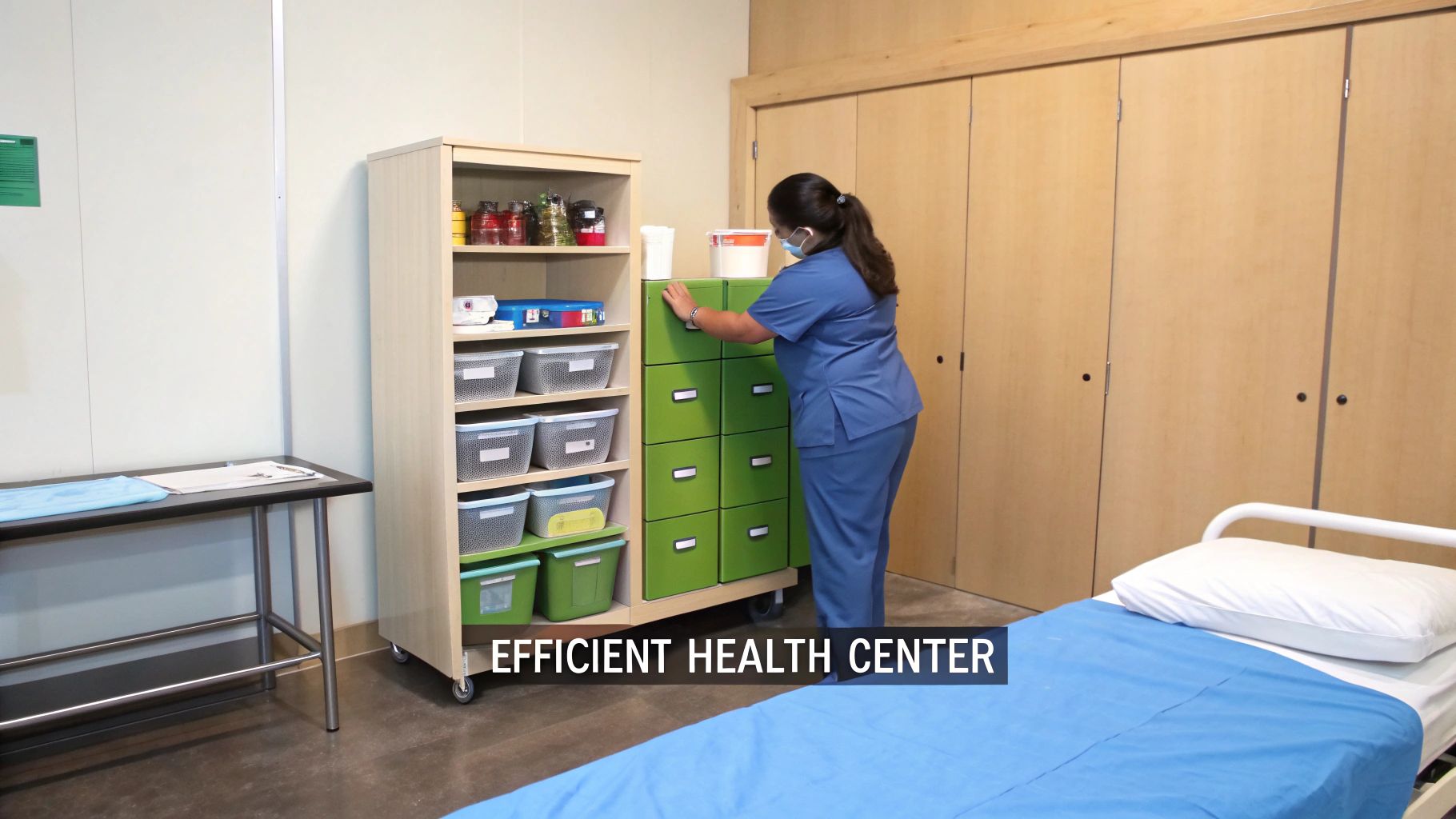
The health center is the operational hub of camper wellness. It needs to run with the precision of a clinic but feel as warm and welcoming as a home. A well-organized infirmary doesn't just happen; it’s the result of careful planning, smart inventory management, and clear procedures every staff member understands. This is where your camp nurse transforms a simple room into a command center for health and safety.
The foundation of an efficient health center is its physical setup. Think logically about how people will move through the space. You need a designated waiting area, a private spot for examinations, and a secure, locked area for medications and sensitive records. Everything should be clearly labeled—from drawers with bandages and gauze to shelves with over-the-counter remedies. Your nurse needs to find things in seconds, not minutes.
Managing medical supplies is a constant balancing act. You have to be prepared for anything without overstocking items that will expire. Before the season starts, your nurse should run a thorough inventory based on last year's usage and your camp's specific activities. A camp heavy on waterfront activities will need more supplies for ear infections and sunburns, while a wilderness trekking camp needs robust first-aid kits for sprains and insect bites.
To stay on top of inventory all summer, a simple system is best:
A well-stocked health center inspires confidence. When parents and staff see that you are prepared for both minor scrapes and major emergencies, it reinforces their trust in your camp’s ability to keep their children safe.
Sick calls are a daily reality. Having a clear, consistent procedure prevents the health center from getting overwhelmed. Your nurse should work with counselors to establish a protocol for when and how to bring campers to the infirmary. This system helps differentiate between a simple case of homesickness and a genuine medical issue.
For example, you might set designated "sick call" hours after breakfast for non-urgent issues. This frees up your nurse to handle documentation, medication administration, and actual emergencies without constant interruption. Of course, the rule should always be that any serious injury or illness gets immediate attention, no matter the time.
A crucial part of this process is documentation. Every single visit to the health center must be logged, no matter how minor. This is where specialized software with medication tracking and dispensing features becomes invaluable for summer camp nurses, creating a secure and searchable record of every camper interaction.
Emergency preparedness isn't a binder on a shelf; it's a practiced, muscle-memory response to a crisis. While you hope you never need it, your team must be drilled on how to respond to scenarios like severe allergic reactions, heat stroke, or a serious injury far from the main camp.
These drills should be realistic and involve key staff beyond the nurse. What does the waterfront director do during a suspected spinal injury? How does a counselor in a remote cabin communicate an emergency? Running through these scenarios helps you find the weak spots in your plan before a real crisis hits.
The sheer volume of health conditions managed at camp highlights this need. For instance, data from one report on camp participants revealed 113,329 cases of seasonal allergies, 40,154 amoxicillin allergies, and 19,001 peanut allergies. These numbers show exactly why summer camp nurses are so essential, constantly ready to manage common yet potentially life-threatening conditions.
In a true emergency, communication is everything. Modern camp platforms with integrated SMS and email alerts are game-changers. With a few clicks, your director or nurse can send instant, targeted notifications to all staff, a specific group of parents, or emergency responders. This ability to communicate clearly and immediately can make all the difference, ensuring everyone acts with calm, professional competence.
Let's be honest, figuring out the health and safety side of camp can be one of the most stressful parts of a director's job. From legal rules to the day-to-day logistics of the health center, getting it right is non-negotiable.
Here are some of the most common questions we hear from camp directors and the straightforward answers you need to run a safe and successful program.
This is usually the first question on every director’s mind. While there's no single magic number, the American Camp Association (ACA) gives us a great starting point. For overnight camps, the standard is to have one licensed nurse on-site, available 24/7. A good rule of thumb to start with is one nurse for every 250-300 campers.
But that's just a baseline. You need to adjust that number based on your camp's specific situation. Think about:
The goal isn't just to meet a number; it's to guarantee that every single person at your camp can get professional medical care the moment they need it.
HIPAA isn't just a suggestion—it's the law. The whole point is to tightly control who can see a camper's Protected Health Information (PHI). In simple terms, only authorized people, like your camp nurse and director, should have access to detailed health records.
Trying to manage this with paper files and binders is a nightmare waiting to happen. Using secure camp management software is really the only practical way to stay compliant. A modern platform has built-in safeguards and technical controls to ensure your camp remains HIPAA compliant. For example, a feature like role-based permissions is a critical control that limits data access. This allows a counselor to see a simple allergy alert for a camper in their bunk, but prevents them from accessing a full medical history and medication list, which only the nurse should see.
HIPAA compliance is about more than just software. It’s about building a culture of confidentiality. Your entire staff needs to be trained on the importance of privacy, and any physical records must be kept under lock and key.
Standing orders are a lifesaver for any camp health center. These are pre-approved treatment plans, signed by a licensed physician, that give your nurse the authority to handle common issues without having to call a doctor for every little thing.
Your standing orders need to be crystal clear. They should outline the exact procedures for predictable camp problems, such as:
Well-written standing orders are the key to providing consistent, fast, and appropriate care for your campers.
At Campium, we built our all-in-one camp management platform to take the stress out of running a health center. With rock-solid tools for medication tracking, secure health record management, and parent communication, everything is designed with HIPAA compliance at its core. See how Campium can help you run a safer, more organized camp at https://campium.com.
Enhanced by Outrank tool




.png)